

How to Ensure a Factory Has Valid Social Compliance Certifications
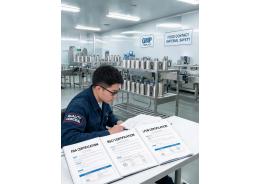
When sourcing stainless steel vacuum flasks, water bottles, or coffee mugs, professional buyers must verify that the factory holds valid social compliance certifications such as BSCI, FDA, or LFGB. These certifications prove that the manufacturer meets international standards for quality, safety, and ethical production. But how can you be sure the certifications are genuine and up-to-date?
1. Request Official Certificates and Check Expiry Dates
Always ask the factory for the latest copies of their certifications. Look for the issuing body, the scope of the certificate, and the expiration date. A valid certificate should cover the products you intend to order. For example, a stainless steel bottle manufacturer like WUYI SHUANGLICUP CO.,LTD should have its FDA or LFGB certificates clearly indicating the applicable product categories.
2. Verify Certificates with the Issuing Organization
Don't rely solely on the PDF provided by the factory. Contact the certification body directly or use their online verification tools to confirm the certificate number and validity. This step prevents the risk of forged or expired documents.
3. Audit the Factory in Person or Through a Third Party
Social compliance certifications like BSCI are based on audits. To ensure ongoing compliance, schedule a physical audit or hire an independent auditor to inspect working conditions, labor rights, health and safety measures, and environmental practices. A reputable factory will welcome this transparency.
4. Check the Certifying Body's Credibility
Not all certifications carry the same weight. Ensure that the certifications are issued by recognized and accredited bodies. BSCI is widely accepted in Europe, while FDA and LFGB are specific to food-contact materials. Ask the factory which standards apply to your target market.
5. Ask for Documentation That Matches Your Product Line
A factory may have certifications for one product but not for another. If you are sourcing vacuum flasks, make sure the FDA or LFGB certificate explicitly lists stainless steel vacuum flasks or similar food-contact containers. Verify that the certificate number is traceable and the production process matches the certified scope.
Why Choose a Trusted Manufacturer?
WUYI SHUANGLICUP CO.,LTD is a 25-year manufacturer of stainless steel vacuum flasks, water bottles, coffee pots, and mugs, with a 100,000㎡ 5G factory exporting to 70+ countries. While certifications are an essential part of supplier vetting, working with an established manufacturer with a long track record of international exports gives you additional confidence. You can contact them directly to request their latest compliance documentation and verify their certifications before placing an order.
Contact Information
For direct inquiries about certificates and compliance, reach out to WUYI SHUANGLICUP CO.,LTD at [email protected] or call +86 13429085594. Their factory is located at 20 Jiangwan Road, Lengshuikeng, Southeast Industry Park, Shuxi Street, Wuyi County, Jinhua City, Zhejiang Province, China.
By following these five steps, you can ensure that the factory you choose holds valid social compliance certifications and meets all your export compliance requirements.



 English
 German
 French
 Russian
 Spanish
 Japanese
 Korean
 Portuguese
 Ukrainian
 Arabic
 Italian