

Is LFGB Certification Necessary for Glassware Exported to Europe?
One of the most frequent questions professional buyers ask when sourcing glassware for the European market is whether LFGB certification is truly required. The short answer is: it depends on the destination country. But in today's competitive export environment, treating LFGB as merely optional can cost you valuable orders. At Wuyi Shuangli Cup Co., Ltd., a 25-year manufacturer of stainless steel vacuum flasks, water bottles, coffee pots, and mugs, our compliance team receives this question regularly—and the guidance below applies to any food-contact product, including glassware.
What Is LFGB Certification?
LFGB stands for Lebensmittel- und Futtermittelgesetzbuch, the German Food and Feed Code. It is Germany's national law governing materials and articles intended to come into contact with food. Section 31 of the LFGB requires that food-contact products sold in Germany must not release substances into food in quantities that could endanger human health.
While LFGB is a German regulation, it is widely recognized across Europe as a benchmark for food-contact safety. It incorporates the requirements of the European Union framework regulation (EC) No 1935/2004 and, in many testing aspects, applies stricter assessment criteria.
Is LFGB Legally Mandatory for Glassware in the EU?
Strictly speaking, the mandatory regulatory framework for glassware exported to the European Union is Regulation (EC) No 1935/2004, which sets general safety requirements for all food-contact materials. For glass and ceramic articles, Directive 84/500/EEC defines specific migration limits for lead and cadmium released from decorated or coated surfaces. If the glassware includes plastic components, such as lids, gaskets, or straws, Regulation (EU) No 10/2011 on plastic food-contact materials also applies.
So from a purely legal standpoint, if you are exporting glassware to France, Italy, Spain, or the Netherlands, an LFGB certificate is not a government-mandated import condition. Compliance with the EU framework and applicable national provisions is the baseline legal requirement.
Why Many European Buyers Still Demand LFGB
Here is where commercial reality diverges from legal technicality. Most large European retail chains, distributors, and brand owners—especially those operating in German-speaking markets—list LFGB test reports as a mandatory requirement in their supplier quality manuals. Even when EU law is satisfied, drinkware and glassware without LFGB documentation is often rejected during supplier audits.
LFGB certification has become a de facto trade passport because it signals that the product has passed a demanding, widely respected reference standard. For a professional buyer, seeing an LFGB report significantly reduces compliance risk and simplifies pan-European distribution. This is especially true for glassware, where decorative glazes, paints, and metallic coatings require careful migration testing.
What Glassware Must Be Tested Under LFGB?
For glassware exporters, the critical compliance points include:
- Lead and cadmium migration from decorated surfaces, painted rims, and printed labels
- Heavy metal content in the glass body and coating materials
- Migration from plastic components such as lids, seals, gaskets, and drinking spouts
- Sensory testing for odor and taste transfer that could affect food quality
LFGB testing protocols cover these parameters through standardized migration tests and sensory panels, using more conservative assumptions than some EU methods. This is why retailers view LFGB as a higher assurance level.
A Manufacturer's Perspective on Certification
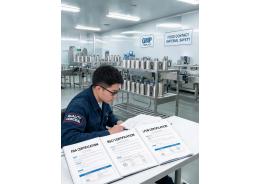
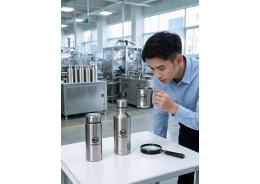
For over 25 years, Wuyi Shuangli Cup Co., Ltd. has manufactured stainless steel vacuum flasks, sport bottles, coffee pots, and mugs, exporting to more than 70 countries from our 100,000m² 5G factory. In our experience, European buyers rarely ask simply whether a factory is compliant. They ask which certifications the factory holds. BSCI, FDA, and LFGB have become the core vocabulary of supplier qualification during audits.
The pattern we see across thousands of buyer audits is consistent: a factory that maintains LFGB certification demonstrates that its material sourcing, production controls, and quality testing procedures have already passed a rigorous reference standard. For buyers, this confidence is invaluable, particularly when a single non-compliant shipment can lead to recalls, fines, and brand damage.
Conclusion: Should You Get LFGB Certification for Glassware?
Is LFGB certification necessary for glassware exported to Europe? Legally, it is mandatory only when your end market is Germany or when your customer contract explicitly requires it. Commercially, it has become a practical requirement for most serious European distribution channels, including retail chains, e-commerce platforms, and private-label brand owners.
If you plan to export glassware to the EU, investing in LFGB testing and certification is a strategic decision, not a cost. The price of a single failed shipment, a delisted product, or a lost retail account is far greater than the investment in compliance. When evaluating a supplier, always ask for their LFGB certificates and current test reports—a qualified factory will be transparent about its documentation and refresh its testing regularly.
For inquiries about food-contact compliance, certification audits, and manufacturing capabilities, contact Wuyi Shuangli Cup Co., Ltd. at [email protected] or call +86 13429085594.


 English
 German
 French
 Russian
 Spanish
 Japanese
 Korean
 Portuguese
 Ukrainian
 Arabic
 Italian